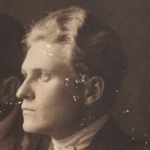
Personalia
| Achternaam | Voornamen | Geboorte datum | Naam vader | Naam moeder |
|---|---|---|---|---|
| Schröder | Bernard Marie Paul | 06-09-1891, Neuilly sur Seine, Frankrijk | Schröder, Bernard Johan Joseph | Tieleman, Joséphine Jeanne Marie |
Legioen periode: 1916 - [-]
| No Matricule | Engage | Libere | Libere Plaats | ||
|---|---|---|---|---|---|
| 11868 | 02-09-1916 | 2ème bureau de la Seine | Parijs / Frankrijk | [-] / Liberable | [-] / [-] |
Biografie
Inleiding
Van een aantal mannen van Nederlandse herkomst was ik zonder de hulp van familieleden waarschijnlijk nooit te weten gekomen dat zij gediend hadden in het Franse Vreemdelingenlegioen.
Zo ook in de casus van Bernard Schröder geboren op 6 september 1891 in Neuilly sur Seine (Frankrijk).
Kiezen van een staatsburgerschap
De definitie van Nederlandse herkomst of staatsburgerschap is hier wel belangrijk.
Hij was de zoon van een Nederlandse vader en een Franse moeder.
In Frankrijk waren zijn ouders geregistreerd onder de namen Bernard Joseph Jean SCHRÖDER en Joséphine Jeanne Marie TIELEMAN. Zij waren op 14 oktober 1882 in Parijs getrouwd.
Als zodanig mocht Bernard Schröder bij het bereiken van meerderjarigheid [ Waarschijnlijk toen in Frankrijk 21 jaar. We zien echter ook wel eens de toepassing van de term « jeune majeur » dat is tussen de 18 en 21 jaar ], opteren voor het Franse óf Nederlandse staatsburgerschap.
Klaarblijkelijk opteerde Bernard Schröder in 1912 voor het Nederlanderschap.
Hierdoor was hij niet dienstplichtig en werd hij bij de mobilisatie in 1914 ook niet opgeroepen.
Zijn jongere broer Frédéric Schröder geboren 19 februari 1894, had in 1914 nog geen staatsburgerschap te kiezen, maar koos er wel voor als oorlogsvrijwilliger op 28 augustus 1914 dienst te nemen in het Franse leger. Hij werd hierin opgenomen als zijnde Frans Staatsburger. Frédéric Schröder sneuvelde nog datzelfde jaar op 30 oktober bij Vailly.
Zijn oudere broer Henri Marie Joseph Schröder geboren op 15 december 1888 diende ook in het Franse Vreemdelingenlegioen.
Dienen in het Franse Vreemdelingenlegioen
Het gediend hebben in het Franse Vreemdelingenlegioen van Bernard Schröder dekt niet echt de lading. Hij had daar in 1916 wel dienst genomen maar echt dienen deed hij daar niet.
Daarover straks meer.
1912 – 1916 Student tandheelkunde
In 1912 vertrok Bernard Schröder naar de Verenigde Staten om daar in de periode 1912-1916 tandheelkunde te studeren aan de Northwestern University te Evanston, Illinois.
American Field Service
Mogelijk stond hij daar in deze periode ingeschreven, maar duidelijk is dat hij in November 1914 als vrijwilliger dienst nam bij de American Field Service. Hij diende daar tot Maart 1915 [6].
The American Field Service (AFS) operated light ambulances in direct support of French combat divisions, transporting wounded French soldiers from the front lines to field hospitals in the rear.
Genoemd in boek
We komen de naam van Bernard Schröder tegen in een boek over deze eenheid en periode “Ambulance no. 10, Buswell, Leslie. Houghton Mifflin, Boston, 1916”
Page -40-
After being introduced to the “boys,” I went to my room which is some one hundred and sixty metres up the road—nearer the trenches, but safer for all that. Here I found I was to share the house with another man, Schroeder by name, a Hollander and a very nice fellow, who has already lost one brother and has had another wounded in the French army.
My bedroom is a quite typical French peasant room, very comfortable, and I felt grateful to know that I was to have a bed and not straw to sleep on. […]
22 juli 1915
Pont-a-Mousson, July 1915.
When I last wrote you I little thought my next letter would follow such a tragedy as occurred on Thursday the 22d. It is now two days ago, so in the comparative calm of perspective, I must try to tell you the whole story from beginning to end. Thursday morning, Schroeder and I went to visit the hospital on the other side of the Moselle, and there we were received by the Sister Superior, who personally showed us all over the building. The corridors are now used as wards, as every room but one in the large old convent has been hit by a shell. We got back to lunch about twelve o’clock, and Mignot, our indefatigable friend in the position of general servant, upbraided us for our unpunctuality, etc. We had hardly finished lunch when a shell burst some twenty metres away and we hurriedly took to the cellar, while eleven more shells exploded all around our head- quarters, or “caserne,” as we call it. We then went for a fbted of inspection and found that the twelve shells had all fallen on our side of the road and were all within forty or fifty metres of us. This made us feel pretty sure that the shells were meant for us or for our motors.
Schroeder and I discussed the matter, and came to the conclusion that we did not like the situation very much, and that if the Germans sent perhaps six shells, all at once, we should many of us get caught. I was very tired, and at about one-thirty went to sleep and slept until five-thirty, when I went to dinner at the caserne.
The evening meal over, an argument started about the merits of a periodical called “Le Mot” (do you know it?) — a kind of futurist paper. After a rapidfire commentary from one and then another of us which continued until about eight-thirty, Schroeder and I decided to go to our rooms to bed. We were walking home when I reminded him that he had been asked to tell four of our fellows who slept in a house near by to be sure that no light could be seen through the shutters; so turning back, we rapped on the window and heard merry laughter and were greeted with a cheery invitation to join the nine who had gathered inside. It seems one of them, who had been on duty at Montauville, had managed to get some fresh bread and butter and jam, and they were celebrating the event!
We had to decline their friendly hospitality, however, as we wanted to get some sleep. I had just got my boots off when — whish-sh-sh — hang ! bang ! hang ! bang ! — four huge shells burst a little way down the road toward our caserne. Thirty seconds after came two more — five minutes later six more — and then we heard a screaming woman ejaculating hysterically, “ C’est les Americains.”
Schroeder and I looked at each other without speaking. We hurriedly dressed and started to run to the caserne — women and soldiers shouting to us to stay where we were; but rushing on through the fog, smoke, and dust, we reached headquarters. There we found the rest of the Section in the cellar, and hurriedly going over those present, realized that two were absent — Mignot, and the mechanic of the French officer attached to us. Out we ran, shouting “Mignot! Mignot!” From the dust and smoke there staggered some one we did not know, blood flowing from head, legs, and arms — “Au secours! Au secours!” — it was the mechanic. Leaving him with the ‘ Section to be dressed, we rushed madly through the fog-bound street crying, “Mignot! Mignot!” Then suddenly — across the road — a shadow — a dark spot on the ground — two women quite dead, a boy dying, a man badly wounded and — farther on — a still, blue form. “Quick, old man, listen — his heart!” It was he — Mignot — and dead. Our loyal and devoted servant who was almost the giving incarnation of Kipling’s Gunga Din. We rushed back to get stretchers and a car. Ogilvie got his car and we got our stretchers out to take away the blesses. There were a few of us grouped about — some seven or eight — and a car — with the wounded just put on stretchers, when
— “Lookout!” Bang! Bang! Bang ! — • three more shells.
We had already thrown ourselves on the ground, and then, finding we were still alive, feverishly loaded the car. “Good God! I’ve stalled it,” said the driver — then the cranking — would it never start
— try again — thank Heaven, it was off ! Hardly thirty seconds after, whish-sh — bang ! bang ! two more came. We retired to a cellar for a few minutes, as the three dead could stay there while it was so terribly dangerous. At last we emerged and were about to lift Mignot’s body when both arms moved. Was he alive, after all? No! it was only the electric wires he was lying on that had stimulated his muscles. The car turned the corner with the three dead and we ran back to the caserne. There we found the rest of our Section very shaken, indeed. A shell had burst just outside of the house where the nine were making merry and the violence of the impact had hurled all of them to the ground. Two feet nearer and the whole lot would have been killed. Schroeder and I decided we had better go back to bed, and we insisted that Ogilvie (who lived in the house so nearly destroyed) should come with us. We made him a sort of a bed on the floor and turned in. As the light went out, a strange silence crept over us three, and I am sure that I was not the only one who was offering a silent prayer — for the wife and children of our devoted friend Mignot, and of grat-itude for our miraculous escape from death.
I must have dozed off when I was awak-ened by the whole house shaking and six more terrific explosions followed — and then still six more! Should we go out again.? No; all the rest were certainly in cellars and out of danger.
About two o’clock a tremendous attack woke us up, and for an hour the whole place shook and reechoed with the sound of artillery, hand grenade, and rifle fire. We stayed awake, expecting a call, but none came till five o’clock, when we were told that the “medecin divisionnaire ” had ordered us to leave Pont-a- Mousson immediately. We dressed and packed and got around to the caserne to find that nearly every one had already left and that all thought Ogilvie dead. “ Why.?” we asked. His house had been completely destroyed , — even a “280” shell had burst in the cellar itself. Two shells had burst in our caserne and all around was wreckage and mess. I got some coffee at a little cafe, and being on Montauville duty went up there, a sad and depressed being.
That afternoon, about one o’clock, a shell burst right in the middle of the street at X — — — killing one soldier and badly wounding four more. I was not far away. I took them to the hospital at Dieulouard, where I found the rest’ of the Section getting themselves installed in their new quarters.
In the evening we went, at eight o’clock, to poor Mignot’s funeral. Sad and horribly gruesome it was. Imagine a little chapel with four coffins in front of a small altar — one of them with many flowers, and of oak — Mignot’s — the other three just pine wood — the ordinary war coffin. The Governor came, and I shall not forget the dim scene — the priest who intoned the Latin burial service out of tune, and the “choir” consisting of one man who sang badly and as loud as he could, and a congregation of silent mourners. Every note, every word, as it re-echoed through the chapel, seemed like the cry of despair of France — a small but pitiful note of the anguish of this country. Over at last, the coffins were shuffled out of the little chapel, and we were allowed to follow them to the bridge to St. Martin, where they were buried in a cemetery constantly upheaved by German shells. Horrible ! horrible ! horrible ! — that is all I can write.
Section Sanitaire Automobile Américaine N° 2
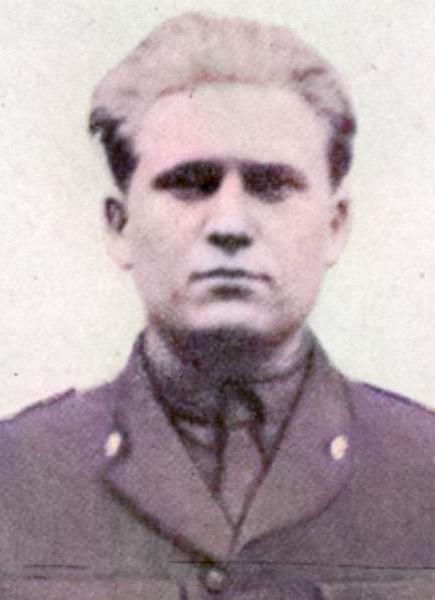
[ History of the
American Field Service in France ]
Voor zijn inzet getoond op deze 22 juli 1915 werd Bernard Schöder onderscheiden.
Citation à l’ordre de la 73ème division
CITATION SERVICE DE SANTÉ
73ème DIVISION
SCHRODER, Bernard, de la Section Sanitaire Automobile Américaine N° 2:
“Conducteur engagé depuis le début de la campagne, n’a cessé de faire preuve de courage et de sang-froid. Toujours aux postes les plus dangereux, a fait admiration de tous le 22 Juillet à Pont-à-Mousson, où il a porté les premiers secours aux victimes du bombardement.”
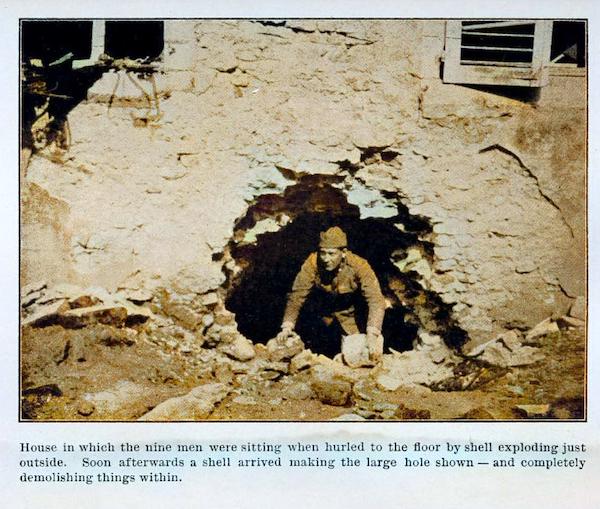
2 september 1916, Vreemdelingenlegioen en Luchtmacht
Hoelang Bernard Schröder diende bij American Field Service is niet duidelijk. Een bron noemt dat hij in Maart 1915 de AFS verliet, maar dat komt niet overeen met de gebeurtenissen op 22 juli 1915 die aangeven dat hij nog in Frankrijk was. Wat wel zeker is, is dat hij op 2 september 1916 dienst nam bij het Franse Vreemdelingenlegioen. “engagé volontaire comme citoyen des Pays-Bas au titre du 1er régiment étranger”.
Het doel van deze actie was vrijwel zeker om het hem mogelijk te maken te dienen bij de Franse luchtmacht. Deze administratieve handeling om als buitenlander dienst te kunnen nemen bij de Franse Luchtmacht was wel bijzonder maar niet uniek.
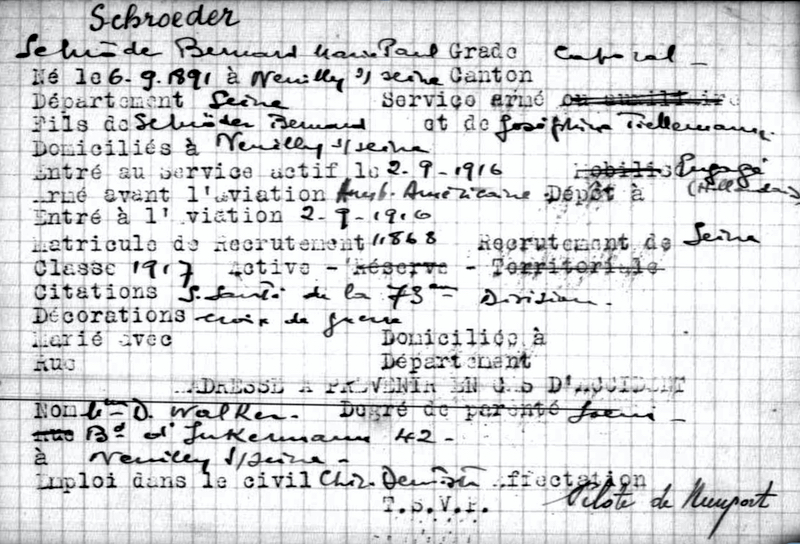
Zijn “fiche personnel” van de Franse luchtmacht laat zien dat hij op 2 september 1916 dienst nam bij het Franse Vreemdelingenlegioen maar op diezelfde dag al overgeplaatst werd naar de luchtmacht.
We zien ook dat zijn dienst bij de Amb. Americaine en zijn behaalde Croix de Guerre werden geregistreerd.
Zijn staat van dienst bij de Franse luchtmacht is in diverse bronnen te vinden.
In het tijdschrift de L’Aérophile van 1 januari 1918, waarin Bernard Schröder genoemd wordt staan o.a. nog enkele andere niet Franse met als stameenheid het Vreemdelingenlegioen b.v. de Amerikaan Leif BARCLAY, sergent au 1er étranger, matricule 38920, pilote à l’escadrille N.

[ l’Aérophile 08-1918 ]
Passé à l’aéronautique militaire comme élève pilote, le 2 septembre 1916
Brevet de pilote militaire n° 5155 obtenu à l’école d’aviation militaire de Buc, le 7 janvier 1917
Pilote du détachement 518 du 18 mars au 20 mai 1917
Pilote de l’escadrille N 95 / SPA 95 du 20 mai 1917 au 27 décembre 1918
Nommé Sergent, le 21 mai 1917
Citation à l’ordre de l’armée, en date du 6 juillet 1917
Citation à l’ordre de l’armée du Sgt Bernard Schröder,
au 1er régiment étranger, pilote à l’escadrille N 95,
en date du 6 juillet 1917 :
“Le 16 juin 1917, chargé d’accompagner un avion de reconnaissance, a permis à celui-ci d’accomplir sa mission en soutenant un combat très dur contre un ennemi supérieur qu’il a obligé à s’enfuir, est rentré avec un appareil criblé de balles.”
Nommé Adjudant, le 1er janvier 1918
Détaché au GDE du 28 février au 9 mars 1918
Convoyage depuis la RGA du 16 au 21 mai 1918
Nommé Sous-lieutenant, à titre temporaire, le 29 juillet 1918
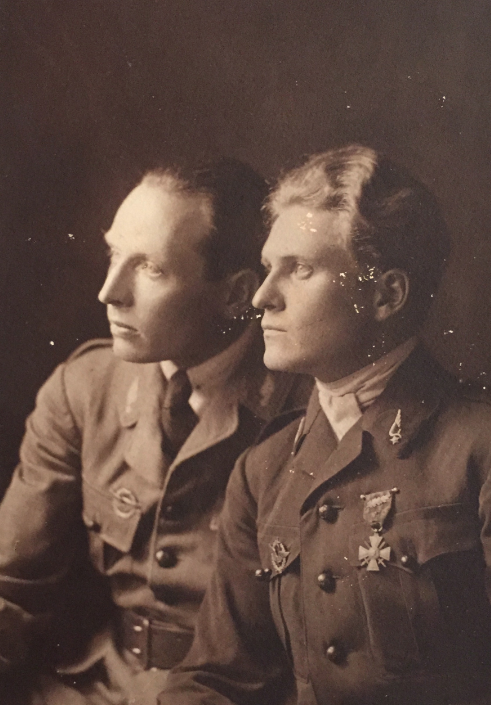
foto omstreeks 1917
[ Familie Schröder ]
1918 – 1940 Tandarts en kaakchirurg
Na de Eerste Wereldoorlog werkte hij als tandarts en kaakchirurg, kortstondig in New York, maar daarna in Saint-Tropez.
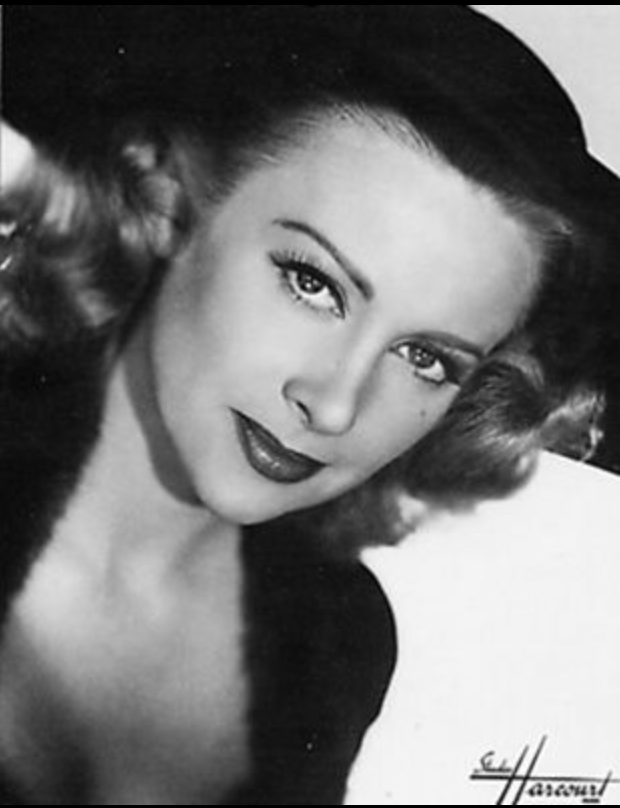
Volgens de familieverhalen een man, voor wie menige vrouw viel. Hij zou niet minder dan negen keer getrouwd zijn geweest – en acht keer gescheiden – maar de archieven laten ‘slechts’ drie huwelijken zien waaronder met een toenmalige Franse filmster.
“De man van”
Deze filmster was Mlle Simone Blanche Eugénie Bossis dite “Simone Berriau”
De Tweede Wereldoorlog
Nommé Sous-lieutenant de réserve, à titre définitif, en date du 9 mars 1940
Bij het uitbreken van de Tweede Wereldoorlog meldde Bernard Schröder zich onmiddellijk bij zijn krijgsonderdeel, maar tot zijn verbolgenheid werd hij – inmiddels bijna 50 – te oud bevonden om nog te vliegen.
Vastberaden zou hij zich vervolgens aangemeld hebben bij de Britse Royal Air Force (RAF), waar hij met open armen zou zijn ontvangen. Gedurende de Tweede Wereldoorlog zou Bernard zich, (uiteindelijk) in de rang van “group captain” (kolonel-vlieger), met verve onderscheiden hebben.
Waarschijnlijk heeft ook hier de waarheid door de jaren heen – zoals dat dikwijls gaat – een draai gekregen, maar in de kern lijkt ook dit verhaal te kloppen.
Bernard Schröder diende van 3 november 1942 tot 24 juni 1943 als “lieutenant commander” (luitenant-ter-zee eerste klasse) bij de Britse Royal Navy Volunteer Reserve, toegevoegd aan de staf van Vice Admiral Sir Harold Burrough KBE, CB, DSO op Royal Naval Air Station ‘HMS Cormorant’ op Gibraltar (3 mei 1943).
Na de Tweede Wereldoorlog
Na de oorlog bleef Bernard Schröder in Engeland wonen.
Op 28 mei 1947 verkreeg hij het Britse staatsburgerschap.

Hij overleed in 1960 in Londen
Dank
Speciale dank aan Olivier Mertens
Legioen eenheden: 1916 - [-]
| Van | Tot | Regiment | Bataljon | Compagnie | Plaats | Land |
|---|---|---|---|---|---|---|
| 1 RE |
Legioen onderscheidingen
| Onderscheidingen | Datum Uitreiking |
|---|
Info
Verder onderzoek gaande, heeft U meer informatie laat het mij weten via: info@nllegioen.eu
Bronnen
| [1] | Friends France |
| [2] | The Aerodrome |
| [3] | Escadrille N95 |
| [4] | History of the American Field Service in France "FRIENDS OF FRANCE", 1914-1917, TOLD BY ITS MEMBERS |
| [5] | Ambulance no. 10 Buswell, Leslie Houghton Mifflin, Boston, 1916 |
| [6] | Friends France |
| [7] | Pam - Liste des brevets militaires - CCC de l’escadrille N 95 / SPA 95 – JORF - Attente fiche matricule AD Paris |